
Amavata is a type of joint disorder explained in Ayurveda. In Modern medical science, Amavata is considered to be close to rheumatoid arthritis, which is regarded as a progressive auto-immune disorder. Its main characteristic features of rheumatoid arthritis are joint stiffness, joint pain, and joint swelling/ inflammation. This condition is 2.5 times more prevalent in women than men in the middle age group. This disease can affect both large joints and small joints. As per Ayurveda, it is caused mainly due to the derangement in the body constituents, particularly the vata constituent. This vata, in its standard functionality, is responsible for the movements of the body parts, which includes all joints of the body. So any derangement in this constituent leads to problems in the joints such as Amavata.
Causes of Amavata:
Now let’s see what the causative factors are leading to Amavata. In Ayurveda, the key reason for the manifestation of any disease is considered to be the derangement of or low digestive power, also called Agni. The causative factor for the manifestation of Amavata is also said to be low digestive power. This low digestive power can happen due to two main reasons. The first one is the dietic habits of a person, and the second is indulging in certain lifestyle practices, which leads to Amavata. Now let’s get to know these causes better with few examples.
Under dietic practices, the practice of having incompatible foods, excessive unctuous food, junk foods, stale foods, fatty foods such as curds, black grams, drinking of impure or contaminated water, etc. are included.
What are Incompatible foods?
The word incompatibility can be understood as two substances being so different that mixing these substances will lead to some harmful effects on the body. For example, the mixing of honey and ghee in equal quantity is said to be harmful to the human body. Similarly, the intake of fish and milk or processing milk with any of the sour substances is considered incompatible. The harm, though, may not be seen as an immediate effect after the intake of incompatible foods but can act as a slow poison in the body and lead to the manifestation of many diseases slowly in the body. In Ayurveda, particular incompatible food substances are explained, which causes many diseases.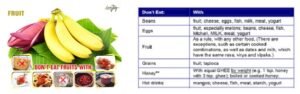
Incompatible physical activities:
These include- Excessive physical exertion or complete absence of exercise, Sedentary lifestyle, Day sleeping, Waking for long hours at night, Controlling the natural urges, and intake of cold items immediately after exposure to hot weather vice versa.


As per modern medical science:
The causative factor of Rheumatoid Arthritis in the modern medical system is said to be unknown. It is still considered an auto-immune disorder with risk factors, including genetic factors and environmental factors. A person having Rheumatoid Arthritis in the family history stands to get Rheumatoid Arthritis at risk 3 to 5 folds more than the person without a family history.
Environmental factors such as smoking and alcohol consumption are said to elevate the risk of getting Rheumatoid Arthritis three times more in people with positive RA factor than in people with negative RA factor.
Now let’s see the symptoms of Rheumatoid Arthritis:
SL.NO. | ACUTE PHASE | CHRONIC PHASE |
1. | Large joint involvement | Joint deformity |
2. | Swelling/inflammation | Spindle-shaped small joints |
3. | Severe pain in the joints | Spindle-shaped fingers |
4. | Weakness with weight loss | Ankylosis |
5. | Lethargy/heaviness | Ulnar deviation |
6. | Morning stiffness | Swan neck deformity |
7. | Muscle wasting | Contractures |
8. | Low-grade fever | Flexion deformity |
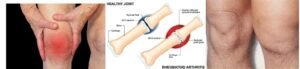
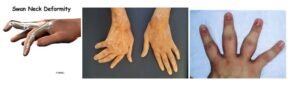
Complications of Rheumatoid Arthritis:
Rheumatoid Arthritis, if left untreated or neglected, may involve systemic organs and cause complications. These include:
- Permanent deformity of the joint involved
- Restricted movements of the joint
- Cardiac involvement- mitral stenosis(constriction)
- Disturbed sleep due to pain and discomfort
- Depression in chronic cases
Treatment in Ayurveda:
As Amavata is said to be a disease predominant with unctuousness, the treatment principles adopted are of opposite qualities, such as
Langhans/fasting/ going light on the diet- langhana might not mean going on complete fasting. Still, it implies having food substances that are light for digestion and improving the already low digestive power.
Dry fomentation/swedana- this treatment principle is of utmost importance as amvata is considered as disease prominent with unctuousness or snigdhata. Giving dry fomentation to the affected joints helps to liquefy the deranged body constituents or the Ama itself and bring down the swelling or inflammation present.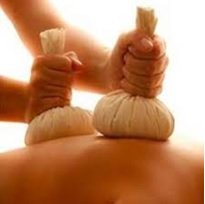
Improving digestive capacity/depana and pacana- this principle mainly helps to improve the digestive power, which is seen to be less in Amavata. Digestive herbs such as ginger, black pepper, carom seeds, garlic, etc. are widely used to improve digestion in amavata.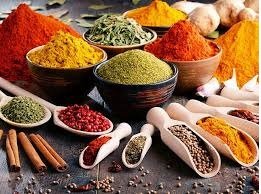
If the disease is in the chronic stage, your doctor might suggest medicines that are rich in oiliness or unctuousness. This is mainly done because, in the chronic phase, the joints tend to get dried due to a lack of synovial fluid in the joints required for lubrication. So the application of oils in the chronic stage will help relieve pain and lubricate the joints, which ease the joint movements.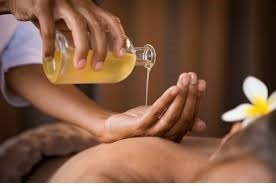
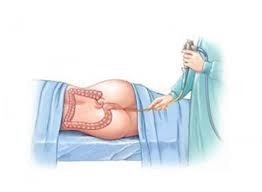
In cases where the symptoms are very severe, purification therapies are adopted to reduce the symptoms’ intensity. The procedures included are purgation therapy or also called Virechana Karma in Ayurveda, and Basti Karma or also called as enema therapy.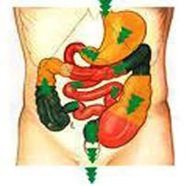
Topical treatments in newly manifested Amavata:
Valuka Sweda/ fomentation with sandbag– In this method, 200 to 250 gm of small grain sand is heated to a medium temperature in a vessel. This mild to medium-hot sand is then tied in a thick cotton cloth and used for fomentation to the affected joint. This helps to liquefy the Ama present in that joint and makes the joints flexible.
The other materials which can be used for dry fomentation are instead of sand are rock salt, sesame seeds, flax seeds, horse gram, etc.
Yoga in Amavata
Bhujangasana/Cobra pose- strengthens the spinal cord along with toning the shoulders and legs.
2. Paschimottasana- / seated forward bend pose- helps in stretching the hamstring muscles, shoulders, and spine. It also improves digestion and relieves stress. 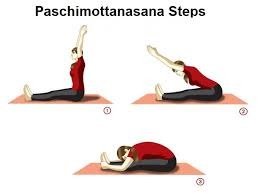
3.Chakrasana/ wheel pose: improves the strength of the wrist joint, spine, hamstrings, and hips.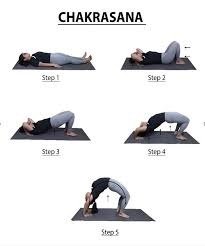
4.Ardhamatsyendrasana/ half fish pose: relives stiffness in knee joints. It relieves back pain and improves the elasticity of the spine.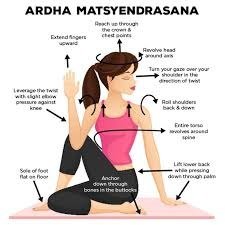
5.Bhadrasana/ butterfly pose: it helps in improving the flexibility of the knee joints and legs.
6. Ardha shalabhasana/ half locust pose improves strength and flexibility of back, neck, and shoulder muscles.
Diet in Amavata:
As Amavata is a vata predominant disease, avoiding food substances that promote vata or increase vata in the body will help relieve the symptoms to a great extent. Here is a list of food items that can be included in your diet to manage Amavata
As Amavata is associated with mild or low digestive power, having food items that light and easy to digest should be included. For example
- Grains such as rice, millets, red rice, etc.
- Pulses such as horse gram and chickpeas
- Spices such as ginger, garlic, carom seeds, fennel seeds, black pepper, turmeric, etc.
- Vegetables such as bitter gourd, drumstick, bottle gourd, and other bitter taste vegetables.
Home remedies in Amavata:
- Garlic along with milk: take 2 to three dehusked garlic bulbs and cut them into small pieces. Boil these with equal quantities of milk and water until it reduces to half of the initial amount. Sip this tea when hot daily twice.
- Castor oil: it is considered the best medicine in Amavata. Mix a teaspoon of castor oil in milk or hot water. This can be taken either at bedtime or early morning on an empty stomach. It acts as a laxative as well as relieves pain. It can also be applied to the affected joints to relieve pain and swelling.
- Buttermilk with spices: take about a glass of buttermilk and add ginger and garlic according to your taste with salt and have it daily as a post-meal drink or even individual drink.
- Hot water: practicing hot water intake always either plain or by adding coin-sized ginger to it will help improve the digestive capacity and relieve pain.
SAY NO TO | SAY YES TO |
· Junk foods/processed/fatty food substances/raw food like salads/untimely | · Homemade food/ properly cooked food/timely food |
· Refrigerated/cold drinks | · Hot substances/hot potency food |
· Stale /leftover food | · Freshly prepared food |
· Sedentary lifestyle | · An active lifestyle with 30 mins minimum of exercises daily. |
· Sleeping in the day time | · Natural 6-7 hrs of a sleep cycle |
· Curds/fish/sugar/black gram | · Buttermilk/ginger/garlic/hot water |
· Stress/anxiety/lethargy | · Calmness/mild activities/happy feeling |